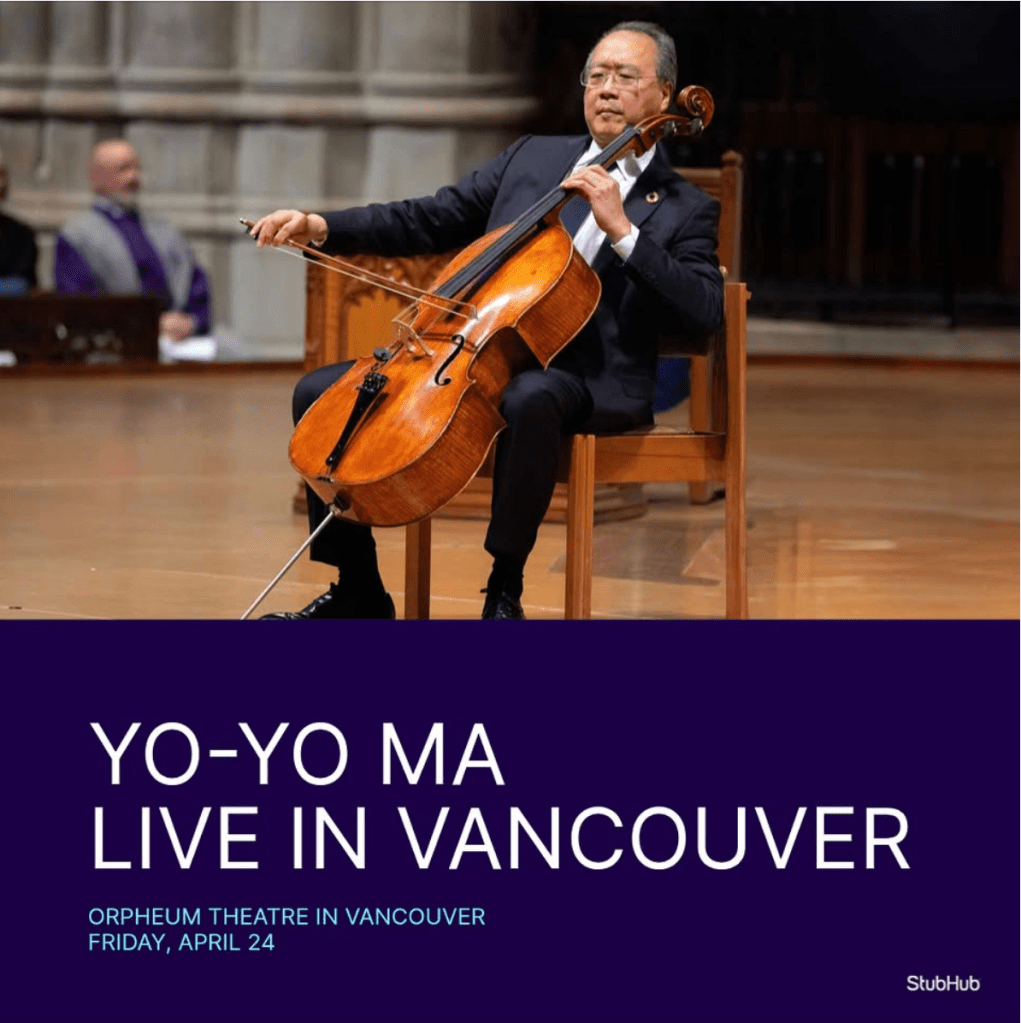
World-renowned cellist, Yo-Yo Ma, brings his extraordinary talent to the stage in 2026
Find your tickets for an event near you in 2026
To excel in intercultural communication, one must go beyond learning another person’s language. It calls for genuine curiosity about their cultural world—an openness that involves empathy, respect, and the understanding that every culture carries its own truths. No single worldview holds superiority over another.
This spirit of cultural appreciation comes alive in the electrifying performances of the Soweto Gospel Choir, an internationally celebrated 20-member ensemble from South Africa. Their repertoire blends South African freedom songs, traditional spirituals, and beloved classics, creating a soundscape that is both deeply rooted and universally uplifting. Singing in a fusion of English and African languages, they channel themes of faith, unity, and the shared human experience. Their soaring harmonies, vibrant choreography, and radiant costumes transform the stage into a living testament to South Africa’s rich musical heritage. Each performance is a rhythmic, soulful journey—an invitation to feel, listen, and understand across cultures.
Africa is a continent of contrasts, from the ancient Egyptian civilization in the north to the incredible natural beauty of sub-Saharan Africa. There are over 800 ethnic groups, each with its own language, religion, and way of life. The vibrancy of Africa is evident in its music and dance, which occupy a central place in cultures throughout the African continent. It is a means of marking rites of passage, healing the sick in soul and body and not only a means of enjoyment but a way of connecting with the gods and an important supporting element in the spiritual, emotional, and social well-being of African society.
Another globally acclaimed expression of gospel-inspired artistry is found in the Alvin Ailey American Dance Theatre. The company’s iconic masterpiece Revelations—first performed in 1960 when Alvin Ailey was just 29—draws from spirituals, blues, and gospel traditions to depict the African American historical experience through a deeply moving, church-infused lens. Infused with Ailey’s own Christian upbringing, it remains one of the most memorable dance works of the modern era, showing how music and movement can bridge cultural divides and illuminate shared humanity.

At Real World Dialogue (RWD), we help mission-driven organizations build inclusive communication and leadership practices that value every mind. Through consulting, training, and digital strategy, we create spaces where diversity of thought thrives — because inclusion isn’t just good ethics; it’s good business.
🌐 Visit: http://www.rwdialogue.com
💡 Inclusive Communication. Real World Impact
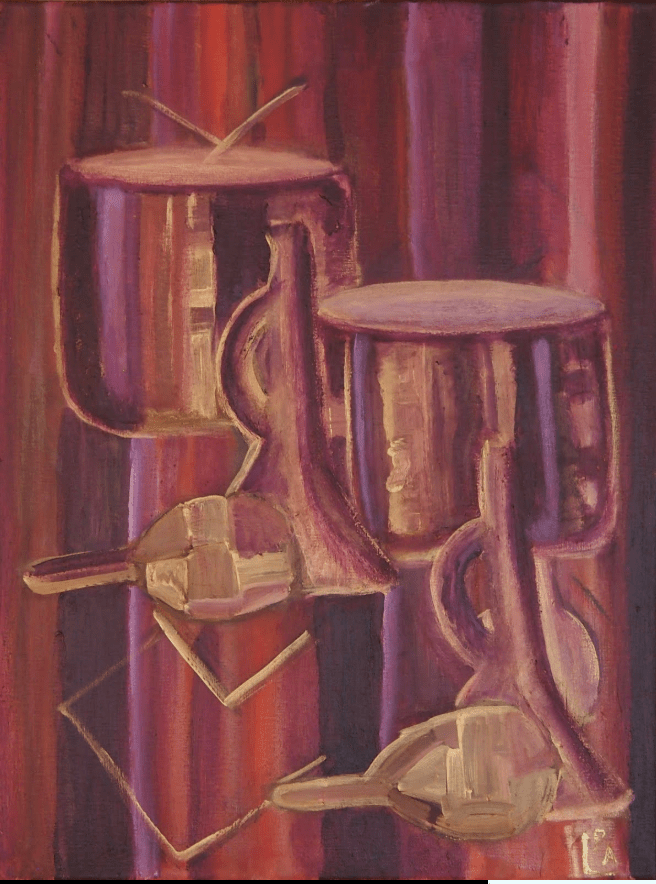
My painting Musical Instruments is a metaphor for my intercultural journey. I chose this theme, inspired by Yo-Yo Ma, the famous cellist, after spending a memorable evening at the Kennedy Center in Washington, DC, listening to his exquisite musical talent.
Young Kim’s article on Intercultural Personhood includes an excerpt from Yo-Yo Ma, who reflects on his musical journey and his quest for intercultural learning and synthesis. He mentions that through music he learned immense compassion and grace, and through his travel, music has been a means of intercultural communication (Kim, Y. Y., 2008). https://www.youtube.com/watch?v=e0E0U-9XOt8&t=622s
My painting Musical Instruments is a metaphor for my intercultural journey. The harmony created by a well-constructed rhythm or melody is comparable to understanding and transmitting the appropriate culturally sensitive messages to achieve effective communication and intercultural competency. The colours in the painting represent the myriad of colourful and dynamic experiences in my life. Each instrument represents the social and physical environment in which my intercultural communication takes place, using the practices I use to communicate, which include: artistic expression, language, and cultural sensitivity. The musical notes and rhythms are my inner thoughts and feelings, and the painting represents the dimensions of my Intercultural Praxis. Inquiry, Framework, Positioning, Dialogue, Reflection and Action. Communicative understanding is reached by appropriate inquiry of the message which in this case is transmitted through music, the frames are my perspectives on how I view the world, the positioning of the instruments represent my experiences of hierarchy, the musical rhythm is my dialogue, the reflection of the light in the painting represents introspection on the experiences that have shaped my communication and the action of playing the instruments in unison creates harmony which is the essence of understanding. Through music, one can communicate feelings and emotions that are understood universally, which is the objective of intercultural communication. By Pamela Mota e Cunha
Cellist Yo-Yo Ma sits down for a wide-ranging conversation about art, empathy, and the responsibilities we share. From his belief that “the magical thing that culture can do—it can actually turn the other into us.” Experiencing art lets us inhabit lives unlike our own; if we truly understand those experiences, they become part of us and help bridge social fractures.
Ma explores music as time travel, communal healing after tragedy, and the courage to create without certainty. With stories from 9/11 concerts to Bach’s suites and Chicago community projects, he models hospitality on and off stage—inviting us to listen deeper, learn across differences, and invest in the next generation.

At Real World Dialogue (RWD), we help mission-driven organizations build inclusive communication and leadership practices that value every mind. Through consulting, training, and digital strategy, we create spaces where diversity of thought thrives — because inclusion isn’t just good ethics; it’s good business.
🌐 Visit: http://www.rwdialogue.com
💡 Inclusive Communication. Real World Impact
 Real World Dialogue
Leave a comment