An unwavering captain guiding us forward in a storm metaphorically describes how we think of great leaders. Globalization has contributed to the inevitability of crises and to navigate them, Presidents, Prime Ministers, CEO’s and managers have effectively used the following guidelines: (Edmondson, 2020).
Communicating often with transparency.
Acting with urgency, despite incomplete information as inaction leaves people lost and unstable.
Maintaining core values and purpose as a “guiding light” despite changing goals and situations.
Asking for support and giving away power even when there is a tendency to maintain control. (Edmondson, 2020).
The authors of Cultural Issues in crisis communication emphasize the necessity of understanding and “being aware of diverse world views, mindsets, and the habits of global publics in order to communicate effectively in crises situations” (Wertz & Kim, 2010. P. 85). Their research compares how Dr. Timothy Coomb’s crisis response strategies and messages differed between the United States and South Korea during similar crises (Wertz & Kim, 2010). A Harvard Business Review similarly mentions that multinational organizations should avoid imposing “single-culture-based” approaches on multicultural situations (Brett et al, 2006).
Building on this foundation, Dr. W. Timothy Coombs continues to explore how emerging technologies are reshaping crisis communication. During his keynote lecture, “Crisis Readiness in the AI Era,” he discussed how the widespread adoption of artificial intelligence—particularly Agentic AI and Generative AI—poses new challenges for crisis teams. Here is his lecture Crisis Readiness in the AI Era: ‘ https://www.youtube.com/watch?v=9c5v8mtilsA
Q: As far as you see, what are the main challenges for crisis management teams with the arrival of AI’s widespread use?
“There’s always been the issue of noise in the digital environment. What’s noise and what really matters. How do I tell the difference between noise and what’s real-that’s going to be more challenging now with this Agentic AI.” (Agentic AI is artificial intelligence systems designed for autonomous operation, acting like independent agents that can plan, decide and execute tasks to achieve goals with minimal human intervention).
So when you get feedback from Generative AI … there always has to be that final human check.”
Dr. W. Timothy Coombs Crisis– Communication Researcher, Keynote Speaker, Consultant, and Trainer Advisory Board for the Centre for Crisis & Risk Communications and Editor-in-Chief of the Journal of Contingencies and Crisis Management.
Edmondson, A. (2020). How to lead in a crisis. TED, The way we work, October 2020.
Wertz, E. K., & Kim, S. (2010). Cultural issues in crisis communication: A comparative study of messages chosen by South Korean and US print media. Journal of Communication Management, 14(1), 81-94.
At Real World Dialogue (RWD), we help mission-driven organizations build inclusive communication and leadership practices that value every mind. Through consulting, training, and digital strategy, we create spaces where diversity of thought thrives — because inclusion isn’t just good ethics; it’s good business.
(Google Talk, Presenting his book The Social Animal, and a discussion on The Quest for Deeper Meaning and How to Know a Person: The Art of Seeing Others Deeply and Being Deeply Seen
“We live in a dehumanizing age. Seeing another human being is the most practical and aggressively effective way to fight back against dehumanization. We live at a time when people are not seeing each other—in this country… and everywhere—and it’s a brutalizing time to be here. The natural urge is to close in, to be protective, and I understand that urge. The people I admire are the defiant humanists who say: ‘I will not be callous. I will not put up barriers. I will not declare war on the other.’ They choose the essential humanistic act—to try to understand your point of view, to acknowledge you as a person worthy of respect, curiosity, and investigation. It is not naïve to lead with respect, trust, and curiosity. It is the most practical and effective thing we can do in a time of brutal dehumanization” (Brooks, 2018, 40:43–41:44).
In his Google talk and in The Social Animal, David Brooks argues that modern societies are facing a profound crisis of isolation, trust, and meaning, driven by an overextension of individualism. While material conditions have improved, social and emotional well-being have eroded. Loneliness has increased, trust in institutions has diminished, and many—especially younger people—struggle with purpose and resilience.
Three Interconnected Crises
Brooks identifies three overlapping social crises:
Isolation – More people live alone, entertain less, and report chronic loneliness. Social disconnection fuels despair, addiction, and declining mental health.
Alienation and Distrust – Trust in institutions and in one another has fallen sharply across generations, weakening social cohesion.
Loss of Meaning (the “Telos Crisis”) – Many people lack a guiding purpose. Without a “why,” setbacks become crushing rather than formative.
When healthy relationships and shared meaning disappear, Brooks argues, people revert to tribalism—seeking belonging through rigid identities, “us vs. them” politics, and conflict-driven worldviews. This dynamic fuels polarization and makes societies vulnerable.
Technology as a Bridge—Not a Replacement
Brooks presents a nuanced and optimistic view of technology, using Facebook as a key example. The central question, he says, is not whether technology replaces face-to-face relationships, but whether it supplements them.
“It’s not Facebook. It’s what you bring to Facebook.”
Research suggests that for most people, social platforms deepen existing relationships—helping organize gatherings, maintain ties, and strengthen community life. For some, technology becomes a substitute for genuine connection, serving as a solace for loneliness. The difference lies not in the tool, but in the social habits, intentions, and communities people bring to it.
Importantly, Brooks challenges the assumption that technology is destroying younger generations. On the contrary, many social indicators for people under 35—violence, teen pregnancy, divorce—are improving, suggesting that digital tools can coexist with healthy social development when embedded in real-world relationships.
Community, Commitment, and the Power of Sport
For Brooks, the antidote to isolation and tribalism is community-building rooted in shared commitments.
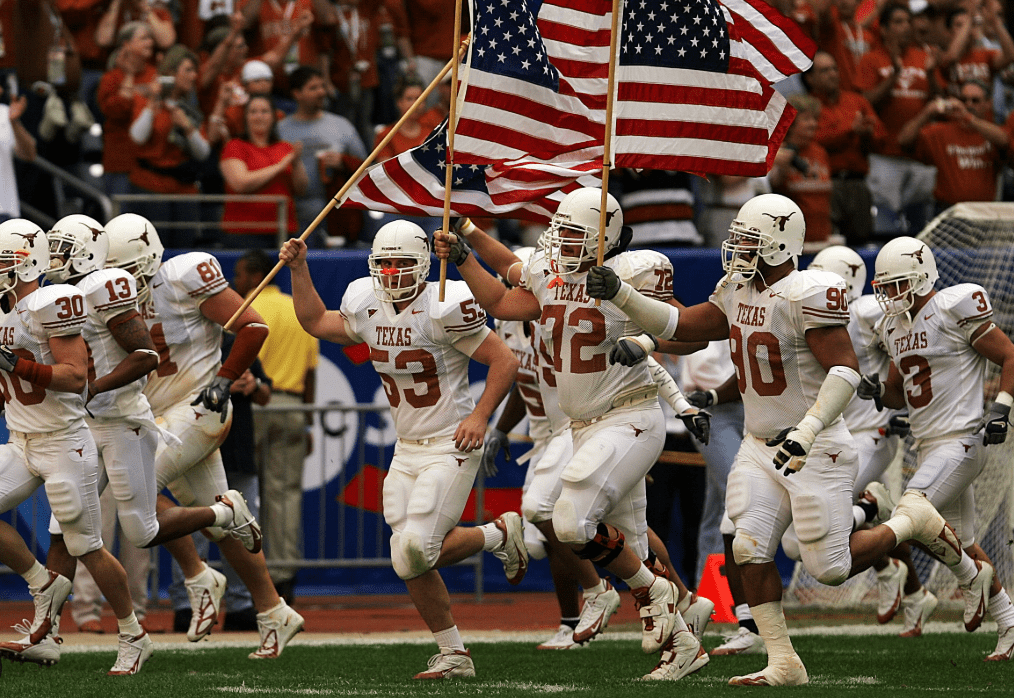
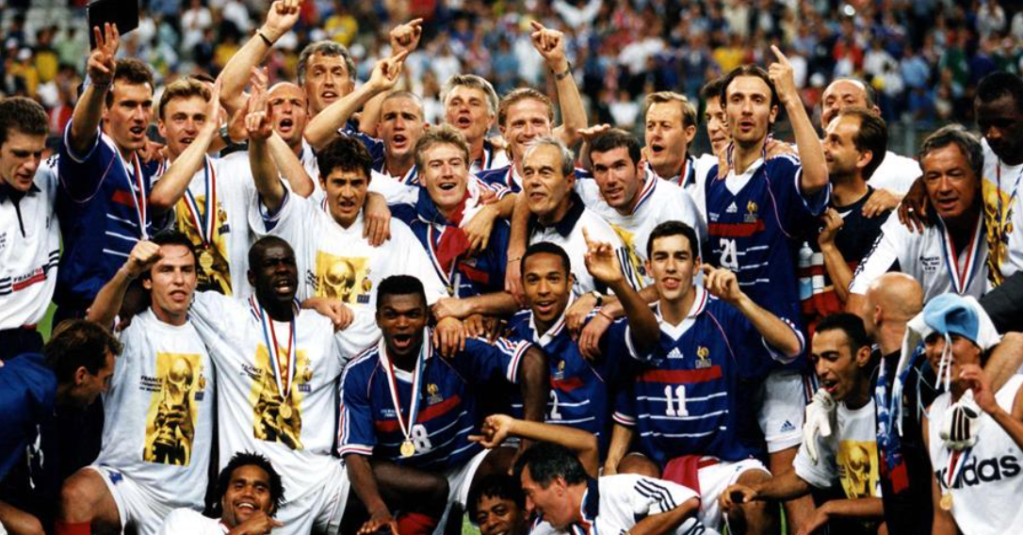
This is where sport and collective activities become especially powerful. Sport:
Transcends cultural, ethnic, and social boundaries
Builds trust through teamwork and shared goals
Challenges stereotypes through embodied cooperation
Creates rituals, belonging, and interdependence
Local sports teams, community leagues, and shared physical activities exemplify what Brooks calls social capital—the dense networks of trust and reciprocity that hold societies together. They provide a healthy form of “tribe,” grounded not in exclusion or conflict, but in solidarity, mutual respect, and joy.
From Individualism to CommunityBuilding
Brooks concludes with a hopeful vision. He argues that societies move forward not only through policy, but through cultural and personal transformation.
A flourishing life, he suggests, rests on four core commitments:
To family and loved ones
To vocation and service
To moral or spiritual frameworks
To community and friendship
We are, Brooks believes, on the verge of a renewal of covenant—a turn away from isolation and tribalism toward communion, solidarity, and healing. Technology, when paired with real-world communities like sports, civic organizations, and shared cultural practices, can help bridge divides and support this renewal.
In short, technology does not determine our social fate. Commitment, community, and meaning do.
At Real World Dialogue (RWD), we help mission-driven organizations build inclusive communication and leadership practices that value every mind. Through consulting, training, and digital strategy, we create spaces where diversity of thought thrives — because inclusion isn’t just good ethics; it’s good business.
Health communication encompasses interpersonal and mass communication activities aimed at enhancing the health of individuals and populations. Skills in understanding and applying information about health issues are crucial to this process and can have a substantial impact on health behaviours and health outcomes (Ishikawa & Kiuchi, 2010). Improved Healthcare Literacy may enhance the ability and motivation of individuals to find solutions to both personal and public health problems, and these skills could be used to address various health problems throughout life. The process underpinning Healthcare communication literacy involves empowerment, one of the major goals of health communication (Ishikawa & Kiuchi, 2010).
How was health communicated in different cultures before the era of globalization?
Health was communicated differently across cultures before globalization. In some cultures, patients were not made aware of their condition for various reasons.
Communication occurs at many different interdependent hierarchical levels of analysis (Kreps, 1988b). Multicultural communication in health care can be examined at the intrapersonal, interpersonal, group, organizational and societal levels of analysis, as depicted in the Hierarchical Levels of Multicultural Communication Model (Kreps and Kunimoto, 1994).
Culture has strong influences on both encoding and decoding processes because culture provides us with guidelines for creating appropriate messages for different situations and audiences, and also provides us with logics for interpreting and understanding different messages (Kreps and Kunimoto, 1994). As a healthcare language interpreter, I facilitate communication between predominantly foreign-born patients and medical professionals, who may also be foreign-born and educated. A healthcare environment which is described by Kreps and Kunimoto as a cultural melting pot.
I understand that effective health communication must consider the diverse cultural orientations within the healthcare system, including national, regional, ethnic, racial, socioeconomic, occupational, generational and health status differences. As a language interpreter, I apply a “two-eyed seeing” approach. This approach involves understanding and integrating multiple cultural perspectives simultaneously to facilitate effective communication. My proficiency in English, French, Spanish and Portuguese allows me to gain deeper insights into various cultural worldviews, enhancing my ability to interpret not just words, but also the meanings and contexts across cultures for patients seeking healthcare.
For example, I recently assisted a French-speaking, elderly Asian patient from Mauritius who required a healthcare team for her condition: a doctor of Indian origin, a resident doctor in training from Nigeria and a nurse from the Philippines.
This case highlights the importance of health communication, as healthcare participants must share relevant information and coordinate effectively to achieve their healthcare goals. Developing interprofessional respect, coordination, and egalitarianism can help the health care team fully utilize group members’ expertise and work together to effectively deliver care (Gifford, 1983). The greater the number of diverse groups one can communicate with successfully to achieve results, gain attitude change or reinforcement and skill acquisition or behaviour change, the greater the reduction of uncertainty and stress (Gudykungst, 1988, p. 39).
Medical professionals should also be culturally sensitive to the patient’s needs. This case exemplifies the importance of understanding not only the surface aspects of the “iceberg” model of multicultural influences on communication but also the hidden cultural influences which are not as apparent and which include: socioeconomic status, occupation, health condition, religion, sexual preference, group membership, educational background and political orientation (Kreps and Kunimoto, 1994). These hidden cultural factors can have major influences on communication in health care contexts.
The multicultural influences on modern health care are not just limited to differences in nationality, sex, age, educational background, or occupation of health care consumers and providers, but they may also act as cultural barriers to effective health communication (Kreps and Kunimoto, 1994). Developing effective multicultural relations between culturally unique participants in the modern health care system is a prerequisite to effective health care delivery (Howe-Murphy, Ross, Tseng, & Hartwig, 1989; McNeil, 1990).
Kreps, G.L., & Kunimoto, E.N. (1994). Effective communication in multicultural health care settings. Thousand Oaks, CA:
At Real World Dialogue (RWD), we help mission-driven organizations build inclusive communication and leadership practices that value every mind. Through consulting, training, and digital strategy, we create spaces where diversity of thought thrives — because inclusion isn’t just good ethics; it’s good business.
“The richness of an artist is the fusion of influences that have shaped his life and work” (Joy of Museum, 2020).
My painting, “Perspectives in Fusion,” is a metaphor for my intercultural journey exploring the unique forms of cultural expression that have been inspirational to my personal intercultural development. The theme is inspired by the voyages during the “age of expansionism,” when explorers led an expedition reaching India. This voyage opened the direct trade and exchange of ideas with Asia, influencing and enhancing economic and cultural growth (“Vasco da Gama,” 2023, para.2).
Cultural fusion theory explains the process of enriching the fabric of national culture and identities into which new information and novel cultural forms are integrated. “It recognizes the world as a churning information environment of cultural legacies, competing and complementing one another, forming novel cultural expressions in all aspects of life, including language, fashion, music, cuisine, pedagogy, legal systems, governance, economic behavior, spirituality, healthcare, norms of personal and interpersonal style and so forth” (Kramer, 2019, para.1).
This spirit of expansion is powerfully memorialized in Belém in Lisbon, where the Monument to the Discoveries rises on the Tagus River, its stone prow carrying Henry the Navigator and the great figures of exploration forward into the horizon. This landmark symbolize Portugal’s maritime wealth and cultural flowering, anchoring the narrative of exploration and intercultural exchange in stone.
This monument echos the essence of cultural fusion theory, which explains how societies weave novel cultural forms into their identities. As Kramer (2019) observes, cultures continuously interact, blending language, music, cuisine, law, and spirituality into ever-new expressions. My painting reflects this same process: the meeting and merging of traditions across time and space, a dialogue of perspectives that transcends boundaries and finds new meaning in the fusion.”
At Real World Dialogue (RWD), we help mission-driven organizations build inclusive communication and leadership practices that value every mind. Through consulting, training, and digital strategy, we create spaces where diversity of thought thrives — because inclusion isn’t just good ethics; it’s good business.





 Real World Dialogue
